I've gathered a pole dance shapes catalog for you in one place, with both Polish and English names. Pole dance shapes are divided into three levels: Beginner, Intermediate, and Advanced. They have English names (the IPSF international standard) and Polish ones – for example, Fireman is Strażak, and Chair Spin is Krzesełko. Below, you'll find a table with shape names and an overview of the most important shapes from each level. Whether you search for "pole dance shapes" or "pole dance moves" on Google – I've collected them all here in one place.
My hit list – pole dance shapes I love
Pole dance shapes aren't a flat list of names to tick off – each one has its own character. Some are icons that almost every one of us wants to nail, others are gateways and milestones, and some I simply adore because they feel good and look lovely from your very first session. I've picked the ones I've written separate guides about – have a look and choose your next goal (the guides are in Polish for now).
More shapes – including Iron X, Ayesha and Jade Split – are next on my list.
How many levels of pole dance are there?
Most commonly, we talk about three levels: beginner, intermediate, and advanced. This is a convenient, general division used by most guides. Pole dance studios often divide shapes more finely – sometimes into five or six stages, from the first spins to purely strength-based elements. In this catalog, I stick to three levels because they are the easiest to navigate when you're just starting out.
When should you move up a level?
There's no single exam – I rely on a simple checklist. You're ready for the next level when:
- you do the shapes from your current level confidently and consistently – on your weaker side too,
- you can come down from every shape with control instead of jumping off,
- your instructor confirms your technique is solid (in the studio they see more than any recording shows),
- you train regularly – strength and grip build over time, not in a single class.
Rushing to skip levels is the quickest way to get discouraged. The harder shapes aren't going anywhere – and your cards have them laid out for when you're ready. 🩷
What are the names of pole dance shapes? (PL, ENG names and level table)
The most frequently searched pole dance shape names – in Polish and English, with their assigned level. English names are the international standard, so "Gemini" or "Butterfly" mean the same thing in every studio worldwide. Polish names are often descriptive (e.g., "strażak" for Fireman) and can be helpful at the beginning. All of them come from my Pole Shapes Book cards.
| Name PL | Name ENG | Level |
|---|
| Strażak | Fireman | Beginner |
| Przedni hak | Front Hook | Beginner |
| Tylny hak | Back Hook | Beginner |
| Krzesełko | Chair Spin | Beginner |
| Karuzela | Carousel | Beginner |
| Siedzonko | Crossed Knee Seat | Beginner |
| Łabędź | Swan Seat | Beginner |
| Nożyce | Scissors Layout | Beginner |
| Żaba | Frog Pose | Beginner |
| Odwrócony crucifix | Inverted Crucifix | Beginner |
| V-ka | Chopper | Intermediate |
| Gemini | Gemini | Intermediate |
| Scorpio | Scorpio | Intermediate |
| Motyl | Butterfly | Intermediate |
| Jade | Jade | Intermediate |
| Superman | Superman | Intermediate |
| Brass Monkey | Brass Monkey | Intermediate |
| Syrena | Mermaid | Intermediate |
| Handspring | Handspring | Advanced |
| Iron X | Iron X | Advanced |
| Shoulder Mount | Shoulder Mount | Advanced |
| Bird of Paradise | Bird of Paradise | Advanced |
| Janeiro | Janeiro | Advanced |
| Allegra | Allegra | Advanced |
| Eagle | Eagle | Advanced |
| Forearm Split | Forearm Split | Advanced |
This is a selection of the most popular shapes – the full list of names (211 entries with entry descriptions) is on the Pole Shapes Book cards. Below, you'll find the same shapes with short descriptions, level by level.
Pole dance shapes catalog – names and descriptions
Below you'll find selected shapes from each of the three levels – with Polish and English names and a short description. This is a representative selection, not the entire catalog: in Pole Shapes Book, I described 211 shapes – about 70 at each of the three levels – and with variations and doubles shapes, my brand's full catalog reaches nearly 290 entries. I provide descriptions here in a condensed form – full entry instructions along with my sister Kaja's own illustrations can be found on the Pole Shapes Book cards. English names are the international standard, Polish ones are often descriptive.
Beginner pole dance shapes
This is your starting point: spins, simple hangs, and seats that teach you grip, body control, and balance. Most of these are performed close to the floor.
| Shape (PL / ENG) | What it involves |
|---|
| Strażak (Fireman) | One of the first shapes in class. Top hand high on the pole – straight, shoulder down; bottom hand at stomach height, keeping distance from the pole. Bent knees hug the pole from both sides, back straight, feet pointed. |
| Przedni hak (Front Hook) | A forward spin with one knee hooked low on the pole; hips in front of the pole, other leg bent, knees wide, feet together. |
| Tylny hak (Back Hook) | A variation of the hook with a backward spin: inner hand under the armpit, leg hooked at the knee, hips in front of the pole, ankles together, knees wide. |
| Krzesełko (Chair Spin) | A forward spin in a "sitting on a chair" position – knees bent at a right angle, hips away from the pole, back straight, core active. |
| Karuzela (Carousel) | A smooth spin: top hand in a basic grip, bottom hand low in an inverted grip; legs bent back, knees wide, feet together. |
| Słoneczko (Attitude) | The outer leg hooks the pole under the knee, the other leg goes bent high to the back; top arm straight and high, bottom arm keeps distance. |
| Kołyska (Cradle) | You hold the pole with your stomach and thighs with a wide hand grip; body tilted sideways parallel to the floor, thighs pulled towards the chest. |
| Siedzonko (Crossed Knee Seat) | A seat on the pole with crossed legs (leg over leg); the hip of the top leg pushed upwards, hips slightly twisted for a secure grip. |
| Łabędź (Swan Seat) | From a pole seat, you bend your legs and point your feet to one side, tilting your body to the opposite; arms wide, inner arm leads forward. |
| Nożyce (Scissors Layout) | From a seat, you lean back on straight arms (bottom hand in an inverted grip under the glute), straighten your back and spread your legs, all while holding the pole with your thighs. |
| Wiatrak (Cartwheel) | A dynamic "wheel" with legs around the pole – inner hand under the armpit, other hand higher, hips in front of the pole, both legs straight. |
| Żaba (Frog Pose) | Knees out, hips open, feet wrap around the pole with a large surface area; one hand goes in front of the pole, arms wide. |
| Dzwoneczek (Tinkerbell) | A spin like a carousel, but the knee on the side of the top arm rests on the pole, and the other leg goes straight back; core active. |
| Layback | From crossed legs, holding on with your hands, you lean back until you're lying down; you move your hands under your glutes and – when you feel secure – let go. |
| Odwrócony crucifix (Inverted Crucifix) | First inversion: you hug the pole with your legs over the entire surface (one on the heel, one on the ankle) and release your hands. |
These are a dozen or so of the approximately 70 beginner shapes in my catalog – the full set with entry descriptions is in the Pole Shapes Book Beginner binder.
Intermediate pole dance shapes
This is where inversions begin – the moment your head goes below your hips. It's a big threshold: it requires core strength and trust in your grip. Don't worry, each of these shapes has its own progress tracking.
| Shape (PL / ENG) | What it involves |
|---|
| V-ka (Chopper) | An important base for many choreographies: you dynamically lift your hips overhead and spread your legs into a "V". Easier entry – from an inverted crucifix. |
| Gemini | An upside-down hang with the outer leg hooked on the pole (entry from an inverted crucifix); the other leg leads back, the inner hand stabilizes the pole under the armpit. |
| Scorpio | The opposite of Gemini – you hang with the inner leg hooked instead of the outer. |
| Teapot | From Jasmine: outer leg hooked, other leg bent, thigh resting on the pole (ankle to ankle), hips strongly forward, supported by the bottom hand. |
| Ballerina | A beautiful, demanding pose – easier with open hips. You hook the inner leg, and with the hand from behind the pole, you grab the free leg. |
| Superman | Body horizontal, legs on both sides of the pole (entry from a side hook); pole deep in the groin, back and legs maximally straightened. |
| Brass Monkey | An inversion with both legs hooked close to the pole and hands under the knee; many entries – from Gemini, Frog, or Scorpio. |
| Konik morski (Seahorse) | From Frog: top leg placed over the bottom leg, thighs tightly squeezed, hands overhead, chest out. |
| Syrena (Mermaid) | From Gemini, you change your grip – you bring your outer hand behind your back to the pole and straighten your legs. |
| Motyl (Butterfly) | Butterfly with straight legs: you hook your heel, straighten your legs, look down, and push your chest forward. |
| Jade | A split from Scorpio – inner leg hooked, and with the outer hand, you pull the front leg towards you. |
| Gwiazda (Star) | From a side hook, you straighten both legs; one hand above the top leg, the other below the bottom leg, which presses its thigh against the pole. |
| Cupid | You hook the inner leg high from the front, push your hips out, and release your hands; the top leg tightly grips the pole, hips and knee in one line. |
| Cross Ankle Release | From a seat, you cross your legs, strongly squeeze the pole with your thighs, and – when the grip is secure – lean back and release your hands, legs straight slightly upwards. |
| Łucznik (Archer) | From Gemini, the free leg goes straight and hooks its foot behind the pole; you transition to a forearm grip, and your silhouette resembles a taut bow. |
This is a selection of about 70 intermediate shapes – the full set can be found in the Pole Shapes Book Intermediate binder.
Advanced pole dance shapes
Strength and dynamic shapes, often supported only by the hands. This is the result of months of regular work – I show them so you can see where the path leads, not to compare yourself from day one.
| Shape (PL / ENG) | What it involves |
|---|
| Handspring | A dynamic entry into an inversion on your hands (top hand in a twist grip, bottom hand with fingers pointing down); many entries – from crucifix, Brass Monkey, Scorpio, or from a jump. |
| Allegra | A split from Scorpio – you turn your back to the pole, the outer hand on the elbow grabs the outer leg, and you straighten both legs into a split. |
| Russian Layback | From Gemini, you hook the foot of your top leg onto the pole, lean back and arch your back, reaching for the pole with your hands overhead. |
| Shoulder Mount | Entry into an inversion over the shoulder, hands in a "cup grip"; elbows pulled in, legs pulled towards you. |
| Bird of Paradise | From Gemini, you pull your inner leg to your body and wrap your arms around it, and straighten your outer leg into a split. |
| Iron X | An easier version of the flag – legs in a wide straddle (less strength than a flag). From Handspring, you turn sideways to the pole. |
| Ayesha | Handspring on the elbow – top hand in an elbow grip (higher than the head), bottom hand in a basic grip; best from an inverted crucifix. |
| Janeiro | From Brass Monkey, you place your leg on the "shelf" of your elbow, turn your back to the pole, and bring the other leg behind the pole; you pull your straight legs back. |
| Cocoon | A shape for shoulder flexibility – you grab your foot with your hands overhead, arms fully extended behind your head hold the leg in the back. |
| Plane | From Brass Monkey, you rest your head on the pole and slowly slide your hips down, bending your legs. |
| Marlo Split | From Gemini, you pull yourself up above the knee, rest your bottom leg with the shin on the pole, and arch back into a split along the pole. |
| Unicorn | From Frog, you bring your top hand between your knees into an elbow grip, and with your other hand, you lift your top leg high. |
| Black Widow | From Cupid, you cross your arms between your legs (bottom in basic, top in cup), head down, release your top leg and pull it towards you. |
| Eagle | An extended Ballerina – you bring your leg over your head, both hands hold the leg, and the inner hand goes to the other side of the pole. |
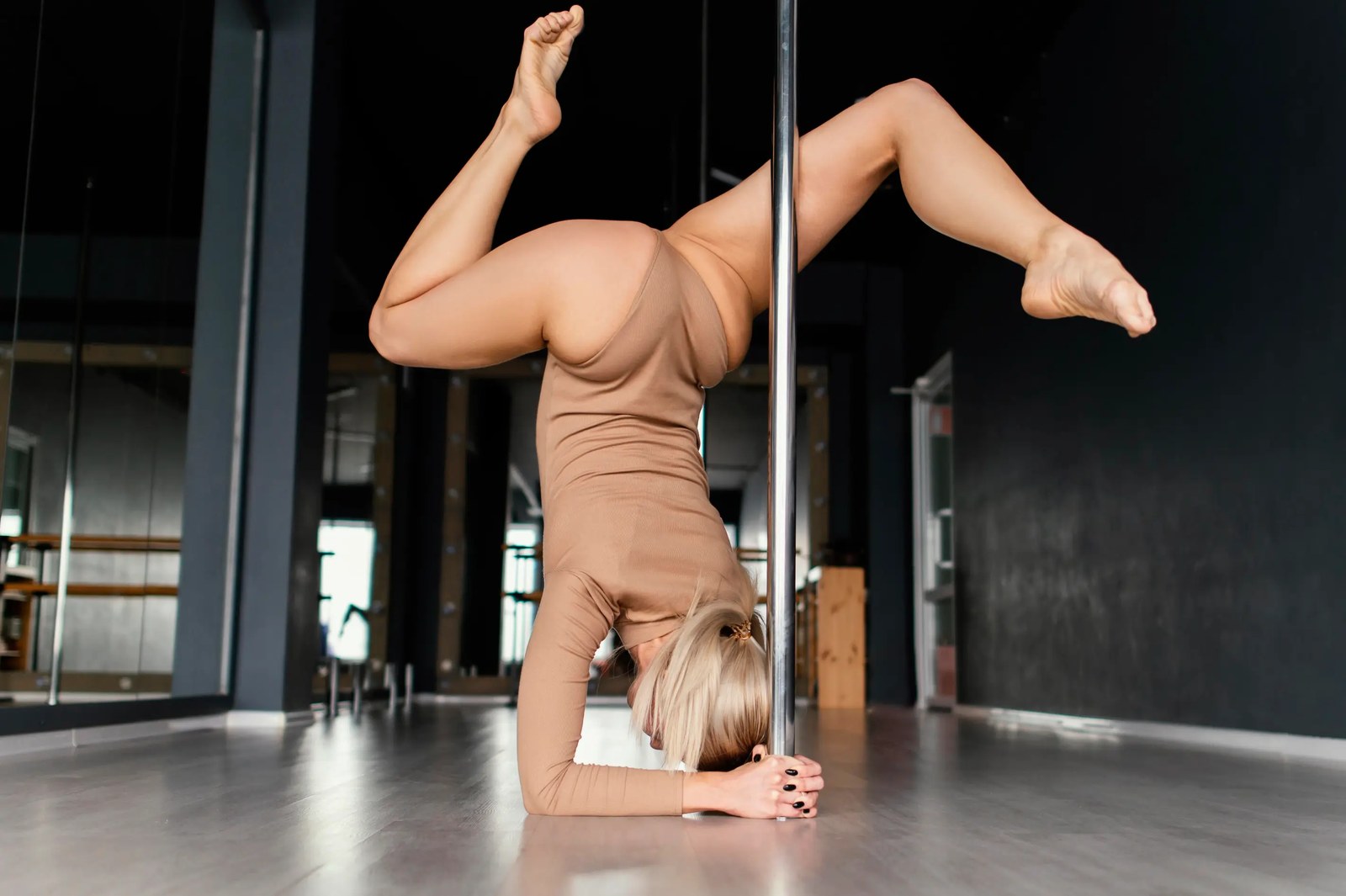
| Forearm Split | From Gemini, you support yourself with your forearm (as in Jasmine), straighten your inner leg towards you, and pull the other into a split. |
This is a handful of the approximately 70 advanced shapes – the full set is in the Pole Shapes Book Advanced binder.
How many pole dance shapes are there?
The number is arbitrary – in practice, there are hundreds of pole dance shapes, as new variations are constantly being created. I've gathered specifics: in the Pole Shapes Book catalog, I described 211 shapes – 70 at the Beginner level, 71 Intermediate, and 70 Advanced. With variations and a separate set of doubles shapes, the full Go Krafty brand catalog reaches nearly 290 entries. Each shape has an illustration by my sister Kaja and a description of how to get into it.
Which shape should I start with?
Most often, the first shape is the Fireman. The first few weeks are primarily about learning how to grip the pole, body control, and basic hangs – without being thrown in at the deep end. If something doesn't work out the first time, it's not a sign that "you're not cut out for it." It's just the beginning. What matters is that you started. If you're just getting into it, check out pole dance for beginners – which shapes to start with (in Polish).
You're not alone in this – pole dance is growing in strength: in Australia, the number of studios increased from 4 in 2004 to 118 in 2018 (a study by the University of Western Australia). Researchers have also classified a pole dance session as moderate-intensity exercise (Journal of Strength & Conditioning Research, 2019). That's why it's worth going step-by-step, starting with easy shapes: in a study by Naczk et al. (2020), pole dancers had greater strength and flexibility than non-training women, and about 37% of them had experienced acute injuries – most often during handsprings, splits and carousel spins. This is not medical advice, but a good reason to build your foundation calmly. Pole Shapes Book cards arrange shapes exactly like this: from basics, step by step.
Why do shapes have English names?
The proper names of shapes are given in English because it's the international standard – this way, "Gemini" or "Butterfly" means the same thing in Poland, Germany, and the USA. They were codified by the IPSF (International Pole Sports Federation) – a federation founded in 2009 – in the document "Code of Points 2025–2027": this is the official register of named elements with assigned difficulty scores, used in competitions worldwide. In 2017, IPSF gained observer status in GAISF (the global association of sports federations – dissolved in 2023), and the federation itself applied to the IOC for recognition of pole sport as a discipline – however, pole dance is not an Olympic sport. Polish names are usually descriptive or regional (e.g., "strażak" for Fireman), which is why I provide both in the catalog.
How to remember shape names and combine them into combos?
The easiest way is to group shapes into short combos of 3–4 elements and practice smooth transitions between them, instead of learning each name separately. It helps to see shapes next to each other – then they form sequences, and repeating the same transitions reinforces both the names and the order of entries.
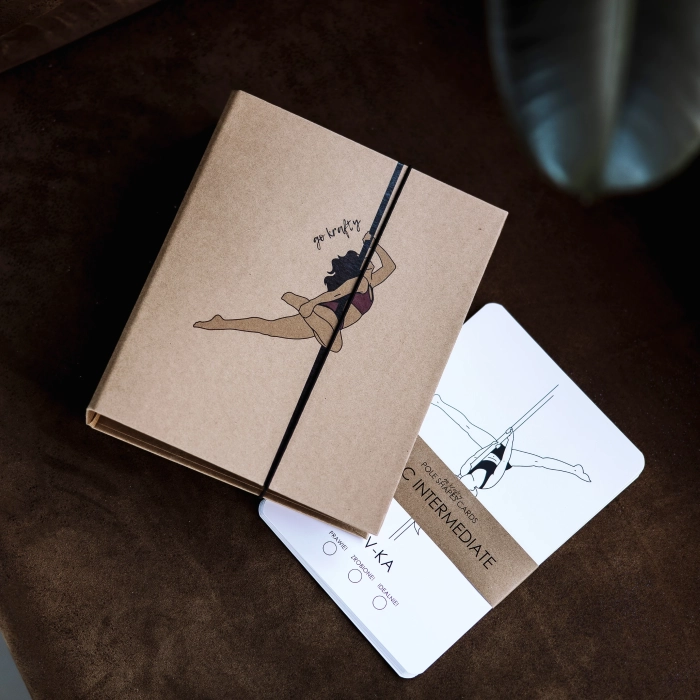
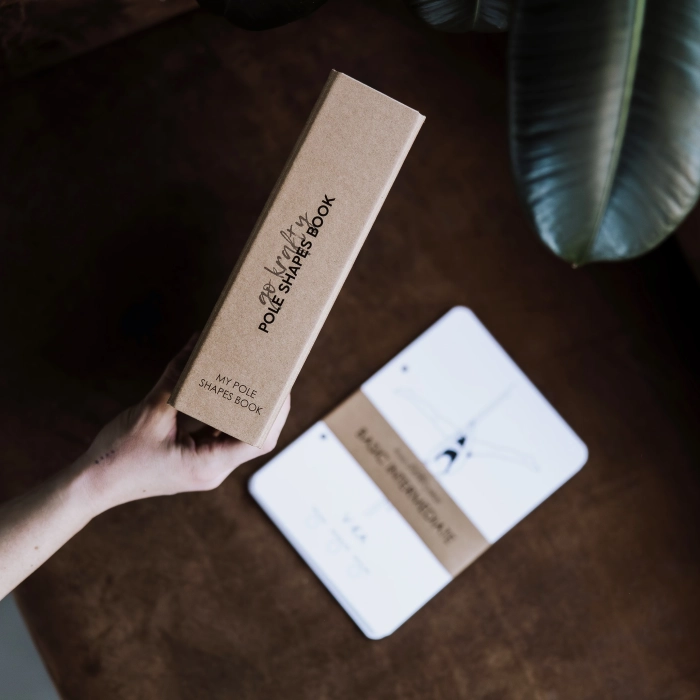
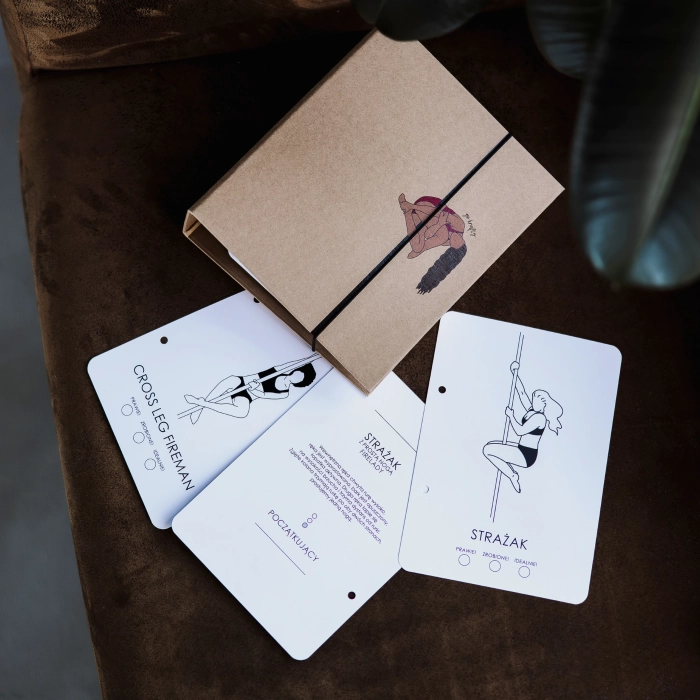
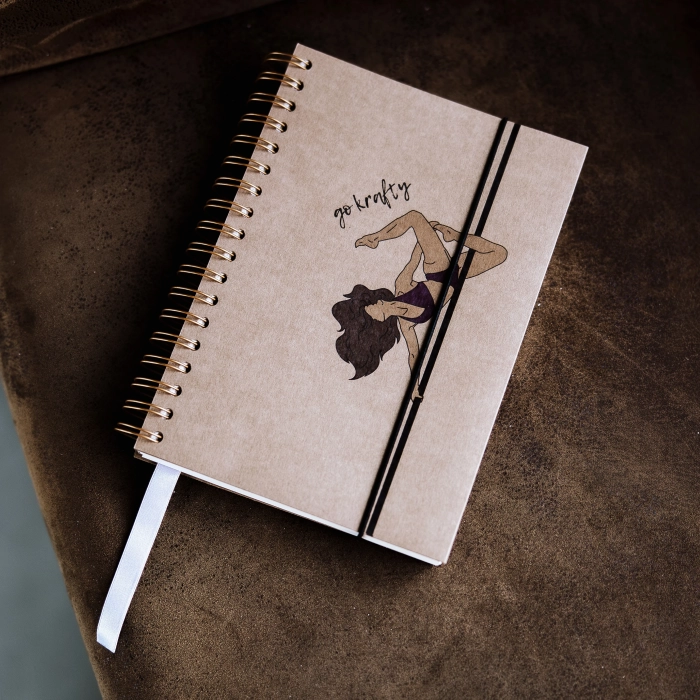
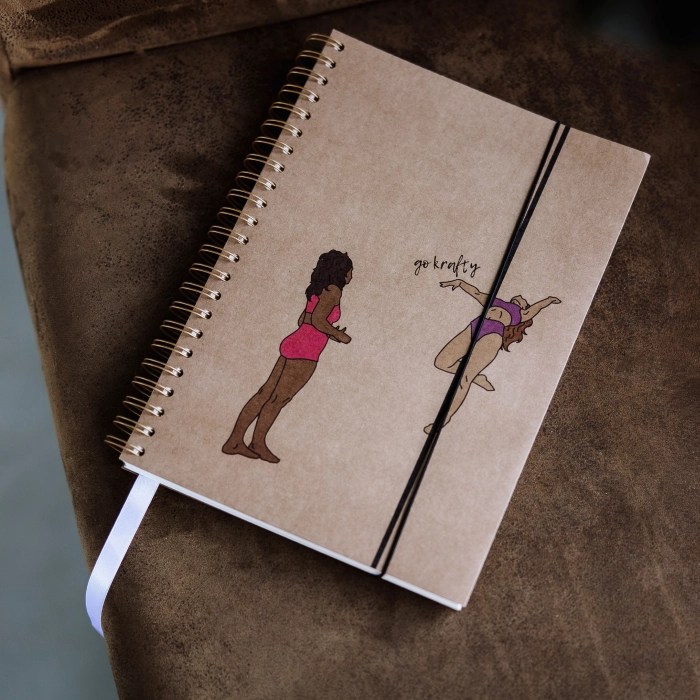
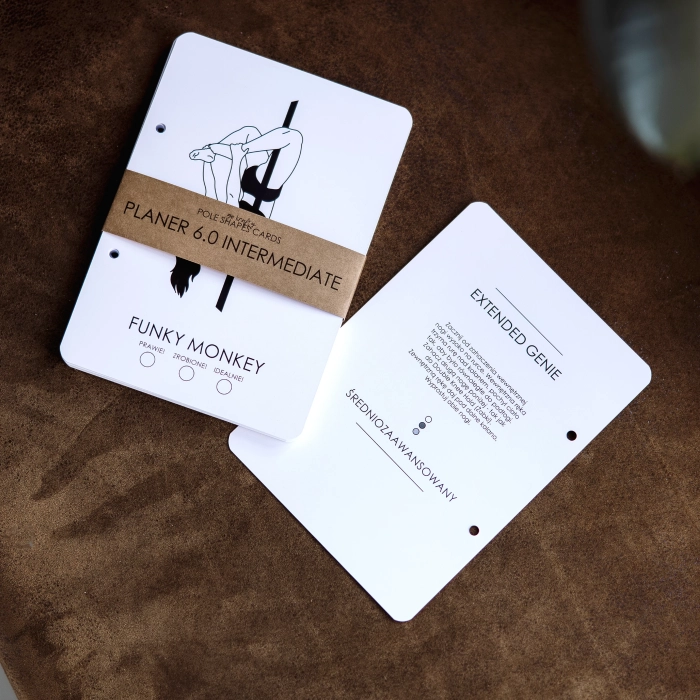
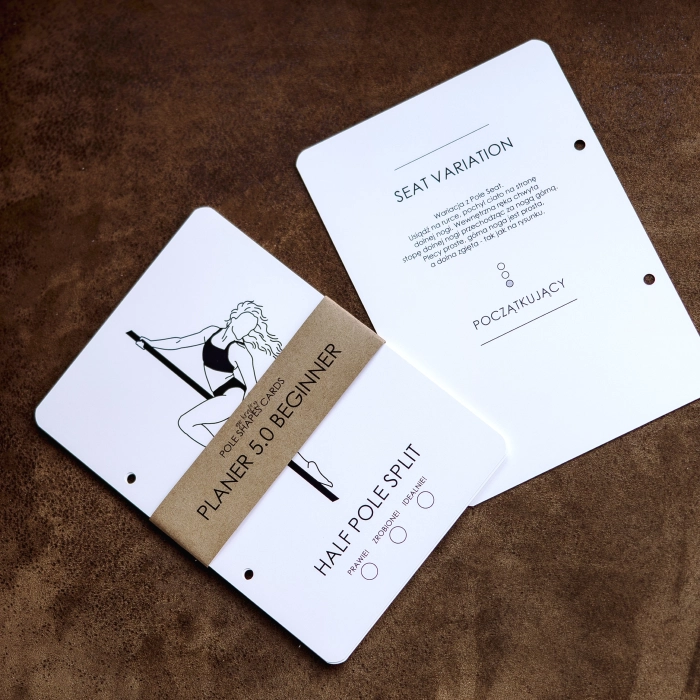
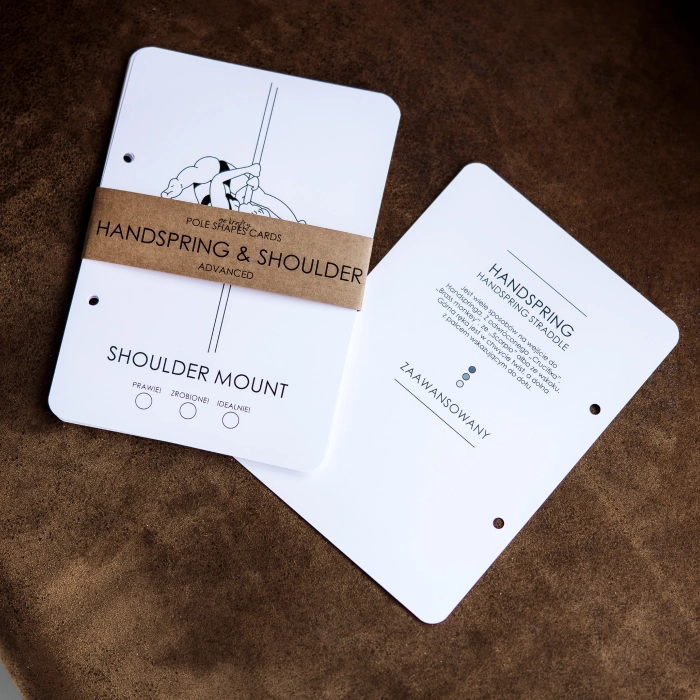
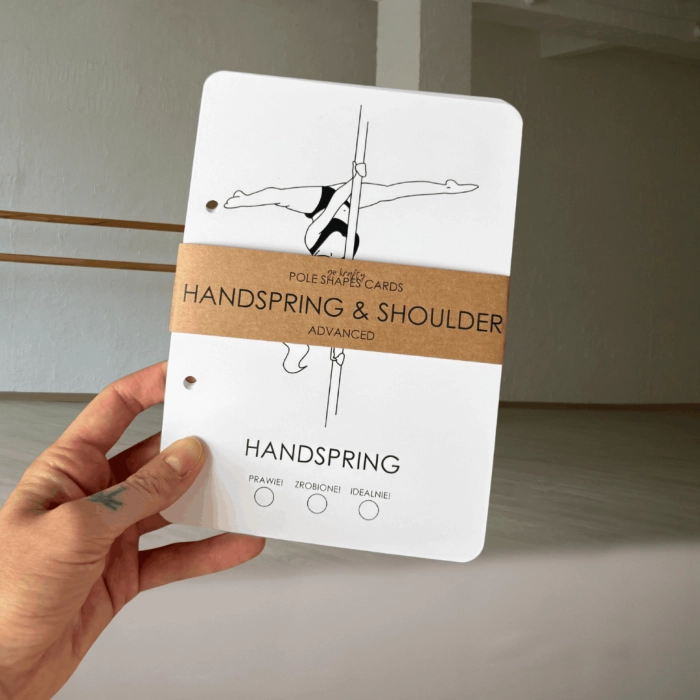
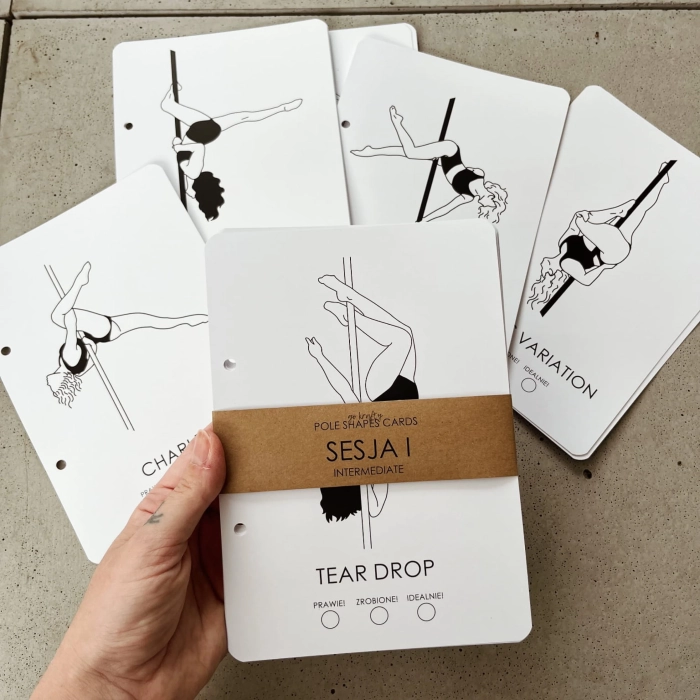
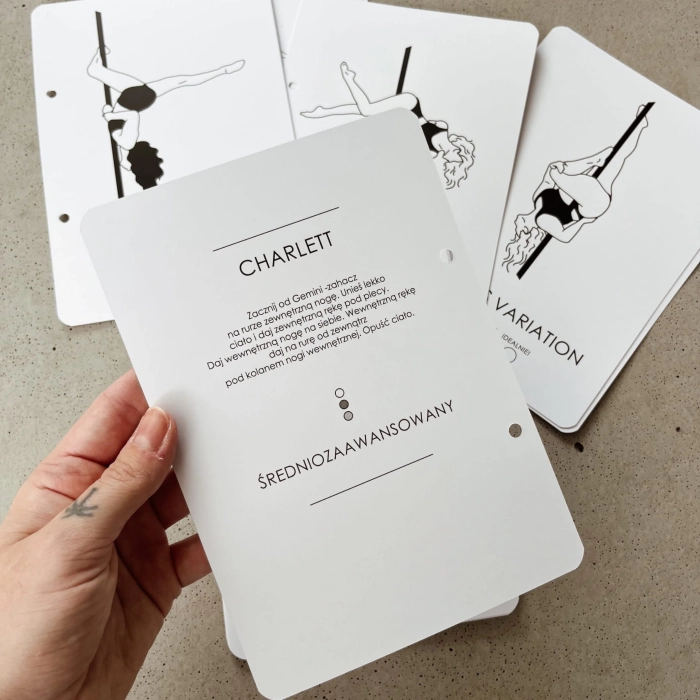
In the studio, with chalk on your hands, your phone is out of the question – and there are really a lot of shape names and entries. That's why I created Pole Shapes Book: an eco binder with my own shape cards – all illustrations are drawn by my sister Kaja – across three levels (Beginner, Intermediate, and Advanced), with about 70 shapes on each. Each card has an illustration, name, and a clear description of how to get into the shape, as well as circles for progress tracking: almost / got it / nailed it.
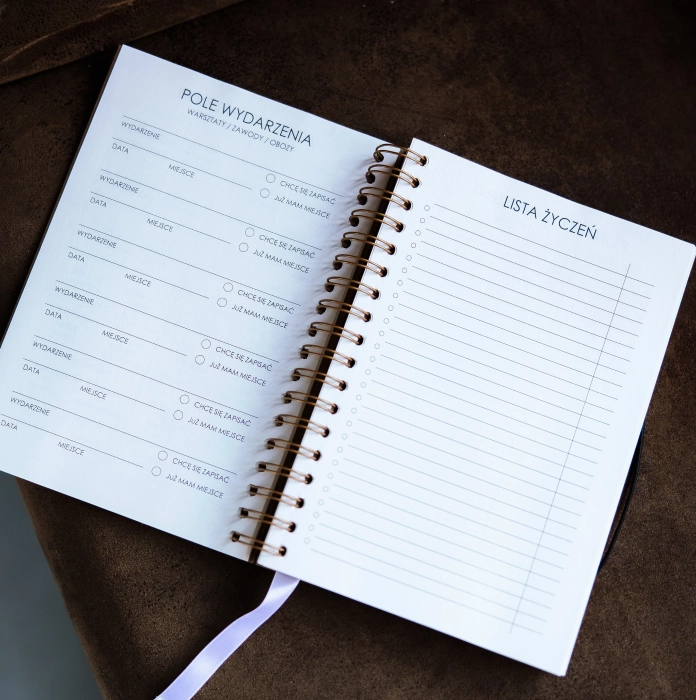
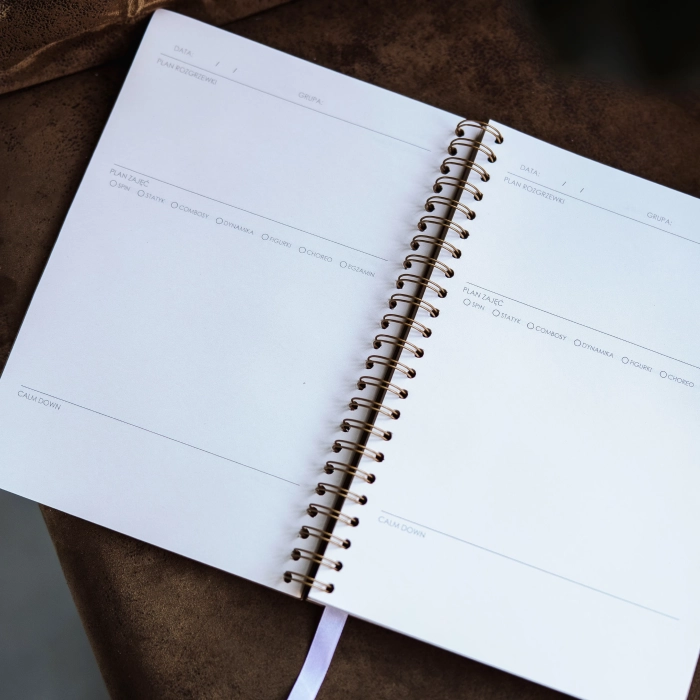
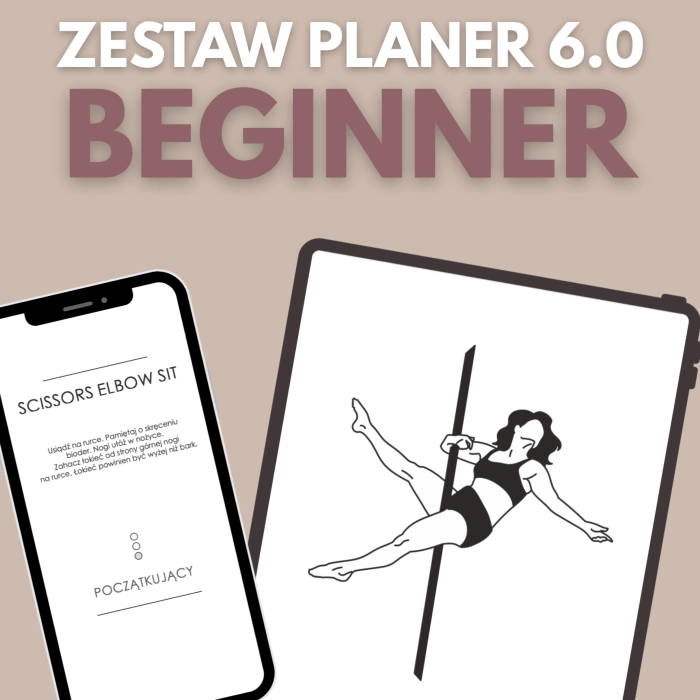
You take the removable cards out of the binder and arrange them in any order – this is a natural way to plan combos (combinations of shapes) and revisit those you want to perfect. They are printed on thick paper with a soft-touch laminate ~180 gsm, resistant to water and chalk, so they'll easily survive your workout. If you train in pairs, a separate set is Pole Doubles cards, and if you prefer to plan your workouts week by week – the Pole Dance Planner with a shape for each week. See if it's for you – you don't have to have everything at once, you can start with the Beginner + Intermediate set and expand it over time.
What does a workout with shape cards look like?
It's easiest to show you. This is one of my own training sessions where I use the cards from the beginner binder – instead of explaining how to use them, I turned on the camera and worked through my shapes. I speak Polish in it, but you can follow everything I do on the pole.
My workout with the cards from Pole Shapes Book Beginner – you can also watch the full episode on YouTube: My pole dance workout with the beginner shapes binder (in Polish).
Where to find the full pole dance shapes catalog (PDF and cards)?
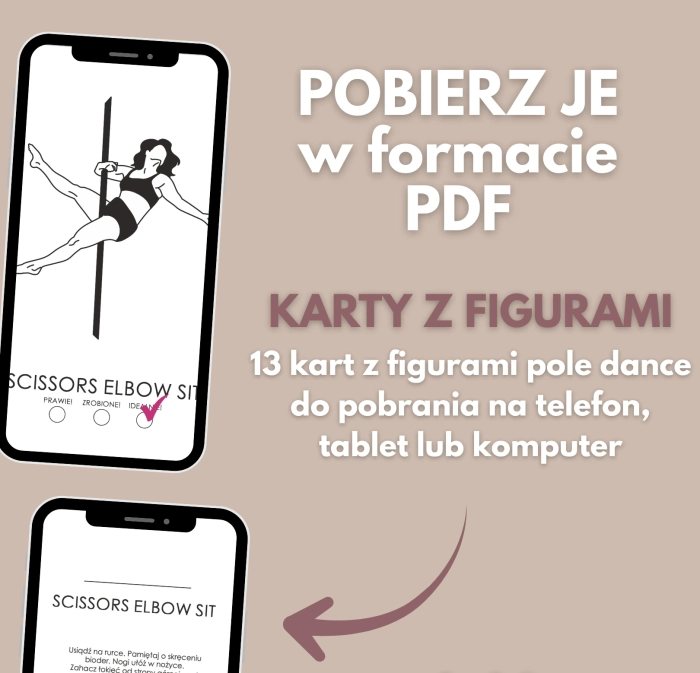
If you're looking for a ready-made pole dance shapes catalog to have on hand at the studio – I have two versions. The physical removable cards in an eco binder (Pole Shapes Book) are printed on thick 180 gsm FSC-certified paper, with a soft-touch laminate resistant to chalk, sweat, and water – that's why they beat your phone in the studio: you won't get the screen wet, and it won't turn off in the middle of your workout. Prefer a digital version? The same shapes with descriptions are in the downloadable PDF shapes catalog (Digital Download) – you download selected sets and print them or keep them on your tablet. Each shape has Kaja's own illustration and a clear entry description – which is often missing from catalogs. See if it's for you.
Most frequent questions about pole dance shapes
How many pole dance shapes are there?
A lot – there are hundreds of pole dance shapes. Together with my sister Kaja (she draws all the illustrations), in Pole Shapes Book, I described 211 shapes – 70 at the Beginner level, 71 Intermediate, and 70 Advanced. With variations and a separate set of doubles shapes, my brand's full catalog reaches nearly 290 entries. This article only shows a selection.
Which shape should I start pole dance with?
Most often, the first is Fireman. At the beginning, you focus on gripping the pole, body control, and basic static holds – only later do inversions come into play.
Are bruises normal at the beginning of pole dance?
Yes. At the beginning, bruises and abrasions can be normal – your body is learning contact with the pole. Over time and with better technique, there are fewer of them. I don't promise it "doesn't hurt," but I promise it gets better.
How long does it take to learn pole dance basics?
It depends on the frequency of your workouts and your initial fitness level. The first results can be visible after a few weeks of regular classes, and mastering the basics often takes several months. In practice, most people train at least twice a week.
Can I practice pole dance shapes at home?
Yes, many beginner shapes can be perfected in the comfort of your home – provided you have a safely mounted pole and exercise caution with inversions. The shapes catalog and cards with descriptions help you practice repetitions independently.
How does aerial hoop differ from pole dance?
Aerial hoop is a separate aerial discipline – shapes are performed on a suspended hoop, not on a vertical pole. The names and technique are different, which is why I don't mix this catalog with aerial hoop shapes – if you're curious about that discipline, I've gathered them separately in an article about aerial hoop shapes (in Polish).
Pole dance is a process and a lifestyle, not a race. You don't have to know all the names from day one – you can keep this catalog handy and refer to it whenever you want. The most important thing is this: what matters is that you started.









 Log in with Facebook
 Log in with Google