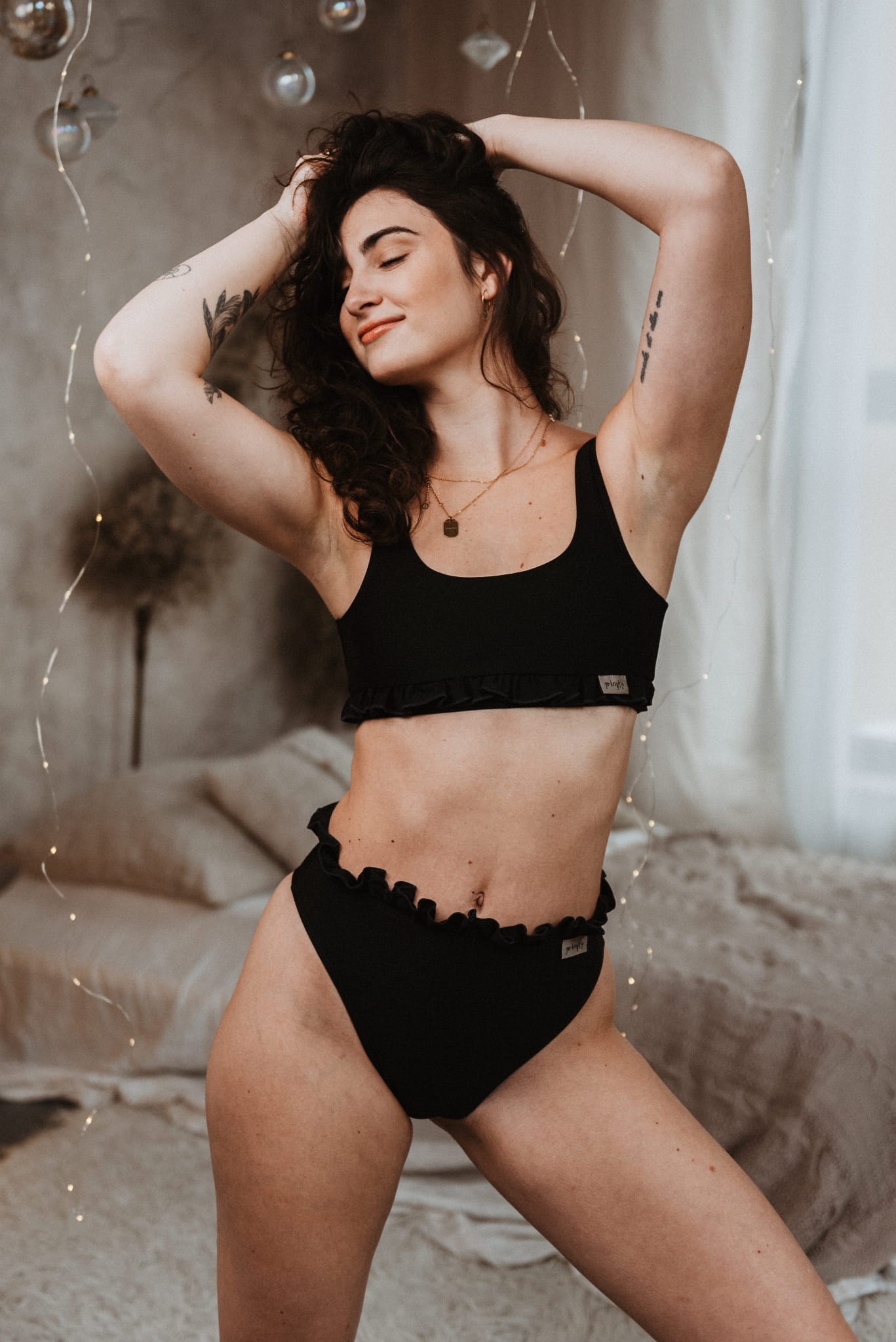
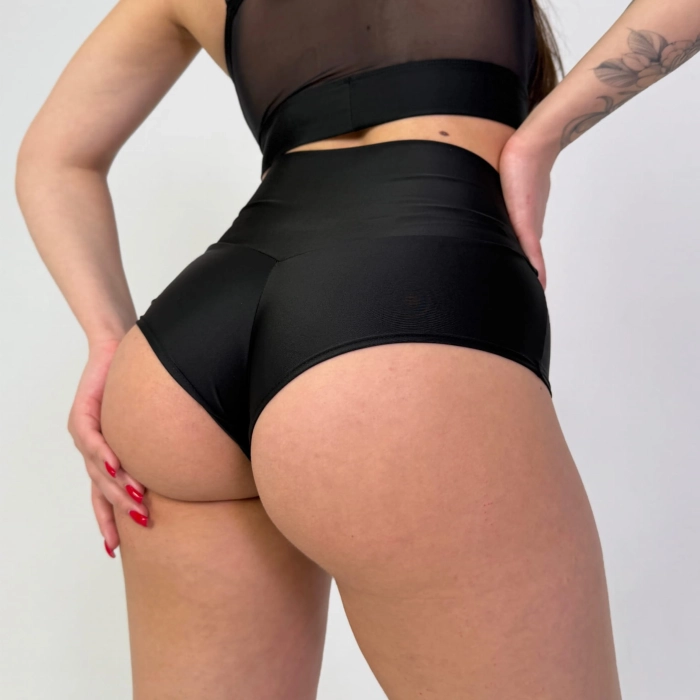
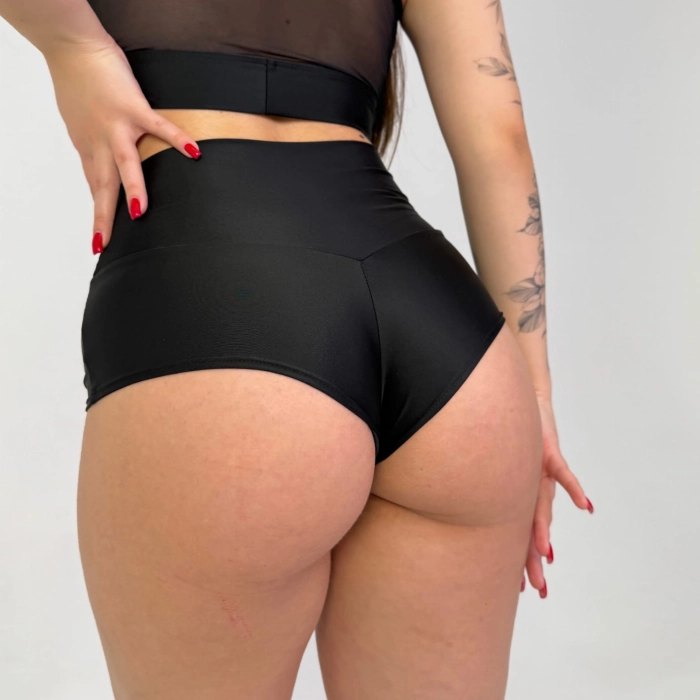
For pole dance, dress in a way that allows your skin to make contact with the pole and gives you full freedom of movement. In practice, this means short shorts and a well-fitted top or sports bra made of stretchy, breathable fabric. Avoid loose clothing – it gets caught and obscures your grip. Below, I break down the entire outfit and explain what works best.
This post is my umbrella guide: if you're looking for a specific item, I’ve linked separate tutorials below. And if you’re just starting out – don't worry, I’ll walk you through it step by step.
What to wear to pole dance? In a nutshell
A pole dance outfit should do three things: provide freedom of movement, expose enough skin for your grip, and make you feel confident. Here is what it consists of:
| Element | Purpose | What to look for |
|---|
| Top or sports bra | Breast support, freedom during inversions | Good support, seamless, fitted |
| Short shorts | Skin-to-pole contact (grip) | Short but not restrictive; stretchy |
| Crop top / T-shirt | Light coverage for when you want to show less | Cropped cut, breathable fabric |
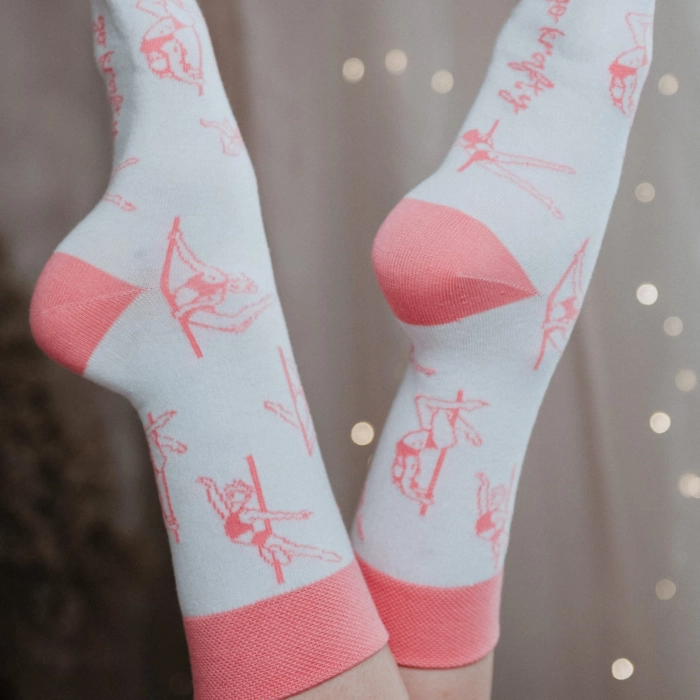
| Accessories | Comfort and detail | Socks, hair ties, wrist guards |
Why short shorts and exposed skin?
Because on the pole, you don't just hold on with your hands – you also use the inside of your thighs, your knees, or your stomach. Bare skin has much better traction than fabric, which is why you expose more of your legs for more challenging pole dance moves. It’s not about fashion; it’s about safety and whether a shape will actually "stick." Most sports fabrics are designed to be smooth and slippery – in leggings, you’ll simply slide down because there’s nothing to catch on.
You don't have to show a lot of skin during your first class – I’ve written a separate guide on how to handle that without any stress: outfit for your first training session (in Polish).
Fabrics – what to look out for
Choose stretchy and breathable fabrics that snap back into shape after stretching and don't lose their form after washing. Knits with elastane work best – they hug the body, recover their shape, and offer full mobility.
A quick tip when reading the label: elastane is the name of the fiber (in the US, it's called "spandex"), and Lycra is a brand name for that same fiber – they aren't two different materials, just the generic and trade names for the same thing (Wikipedia: spandex). Usually, just a few percent of elastane in the composition is enough for the garment to stretch well and hold its shape – the rest is typically cotton or polyester. Skip rough or stiff materials that restrict your movement.
Pole dance for every body
Pole dance is for every body – you don't need any "perfect" shape to feel great in the studio. The most important thing is that your outfit is comfortable and that you feel like yourself in it. If you prefer more coverage, reach for a looser crop top or an oversized T-shirt; if you like minimalism – a top and short shorts are more than enough.
Choose your gear
Now that you know what an outfit consists of, dive into the details where you need them most:
You can find all the outfits I’ve curated for fellow dancers in the Pole Dance Clothing category.
Frequently Asked Questions
What should I wear to pole dance?
Ideally, short shorts and a fitted top or sports bra made of stretchy, breathable fabric. This set gives you freedom of movement and exposes enough skin for a secure grip on the pole.
Why do we wear short shorts for pole dance?
Because bare leg skin has better traction on the pole than fabric. For shapes held by the thigh or knee, skin contact is what ensures safety and stability.
Can I train in leggings and a T-shirt?
For starters and learning basics – yes. Over time, for moves based on leg grips, shorter shorts will be necessary. It's better to avoid loose, flowy clothing as it gets caught.
What is the difference between elastane and Lycra?
None, when it comes to the fiber itself – it's the same elastic thread. "Elastane" is the generic name (in the US: "spandex"), and "Lycra" is a trade brand for that fiber. On the label, the content is more important than the name: a few percent of elastane is enough for the outfit to stretch well and snap back into shape.









 Log in with Facebook
 Log in with Google