On the pole, bare feet give you the best grip – it's your skin that provides the traction, while regular socks just slip. But the studio is a shared space, and floors you walk on barefoot can be a pathway for fungal infections or warts. That's why foot care in pole dance is about two things: grip on the pole (barefoot) and hygiene around it. Below, I'll get specific about how to take care of them.
Bare feet or socks on the pole?
For learning shapes – barefoot. A bare foot has the best contact with the pole, and regular socks are slippery and can lead to falls during floorwork. There are special "grip socks" with a grippy finish, but these are for traction on the floor (with cutouts so your skin still touches the pole), not for gripping the pole with your foot. In short: on the pole – barefoot; socks are for comfort and hygiene off the pole.
Foot hygiene in a shared studio
This is a topic few people talk about, but it's worth it. Floors and mats that many people walk on barefoot are known environments for transmitting athlete's foot and warts (HPV virus) – similar to changing rooms or pool areas. And this isn't made up: in a study published in the Journal of Family Practice, 27% of teenagers who used communal showers had plantar warts, compared to only 1.25% of those who didn't use them (Johnson, 1995). Athlete's foot isn't rare either – globally, it affects about 3% of people at any given time, and communal wet areas are a commonly named risk (Leung et al., Drugs in Context, 2023). I'm not trying to scare you: you can genuinely reduce the risk with a few simple habits:
- Don't walk barefoot in common areas (locker room, changing room, hallway) – wear socks or flip-flops there.
- After training, wash and thoroughly dry your feet, especially between your toes (moisture encourages fungal growth).
- Have your own towel and don't borrow other people's socks.
- If you notice persistent itching, cracked skin, or a change on your foot – show it to a doctor or podiatrist. There's no shame in it, it's just regular prevention.
And this is where socks make sense: by wearing socks when walking around the studio off the pole, you limit direct skin contact with the shared floor – it's a simple habit, not a guarantee, but it works in your favor.
Daily foot care
Your feet work hard in pole dance, so a few habits make a difference:
| Habit | Why it's worth it |
|---|
| Washing and drying | Hygiene + dry skin between toes = lower risk of athlete's foot. |
| Moisturizing | Prevents dryness and cracking (especially in winter). |
| Massage / rolling | After an intense session, it relaxes and improves circulation. |
| Foot strengthening | Toe curls, walking on tiptoes – better foot control and stability. |
At first, chafing and blisters are normal – your skin is just getting used to the pole. Over time, it toughens up and it's much more comfortable.
Where do Go Krafty socks fit in?
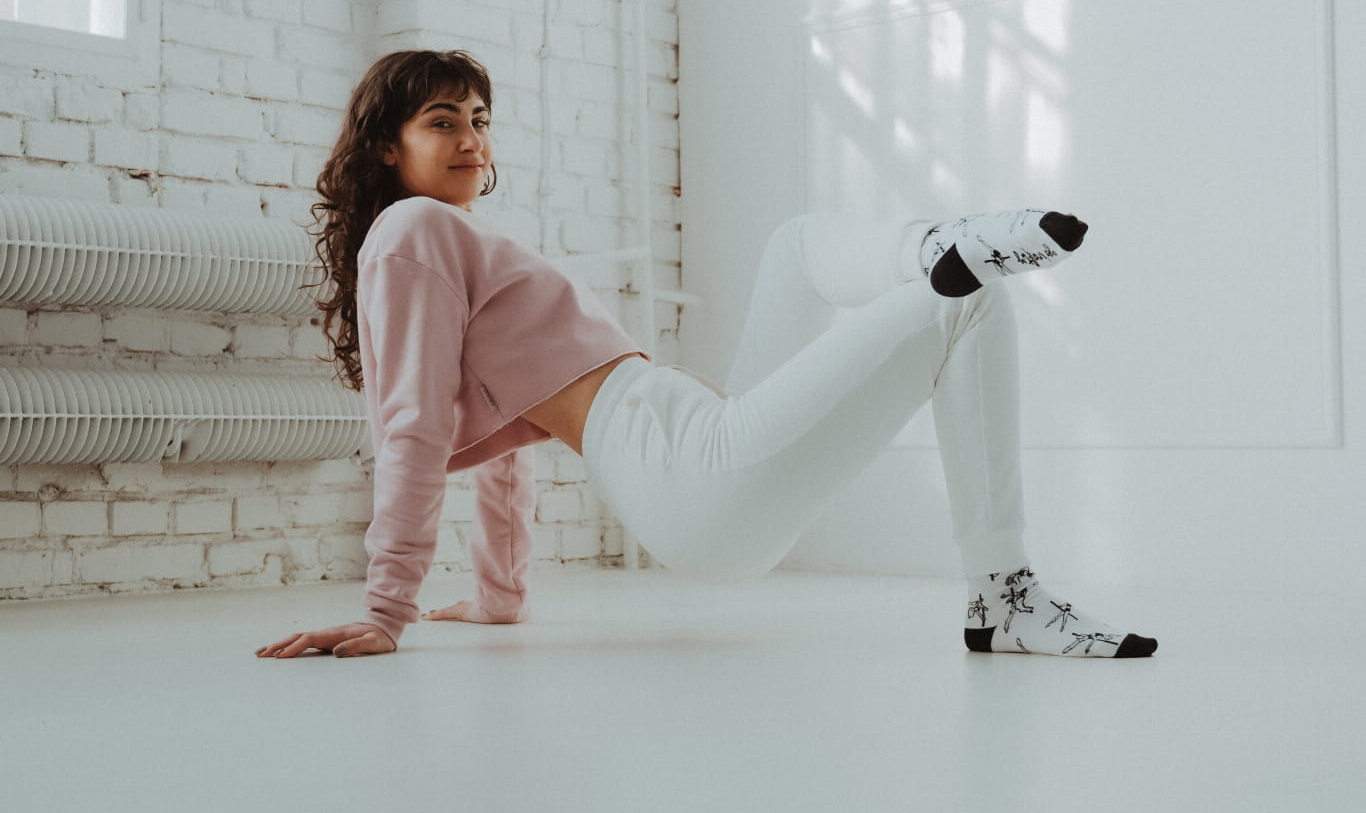
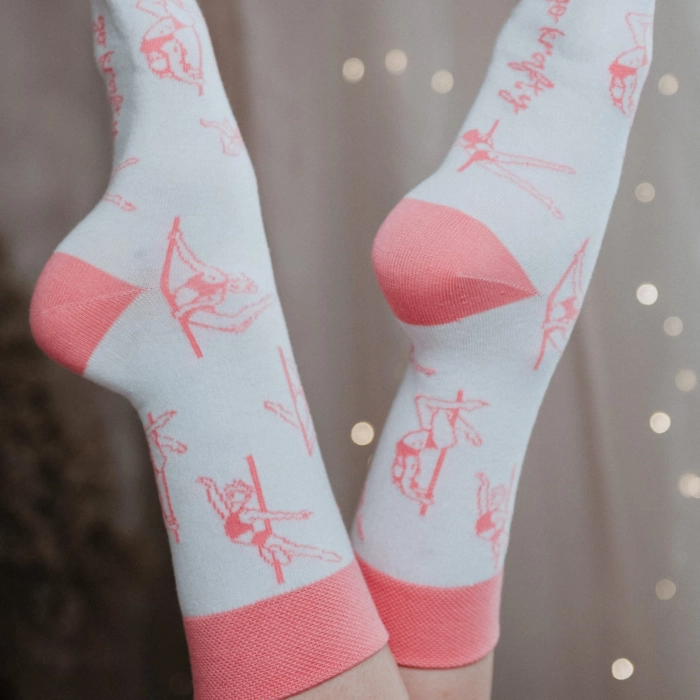
Let's be honest: my socks aren't "grippy" – they're decorative, cotton socks with a pole dancer motif. Their place is during warm-ups, moments off the pole, on the way to the changing room, and simply for warmth and good vibes in the studio (the girls call them "power socks" 🩷). So, exactly the role I mentioned above – comfort and hygiene off the pole, not foot grip on the pole. If you're putting together your complete pole studio kit, check out my guide to pole dance outfits – there I gather what's most comfortable to train in.
Frequently Asked Questions
Do you train pole dance barefoot or in socks?
On the pole – barefoot, because your skin provides the best grip, and regular socks slip. You wear socks more for off-pole activities: for warm-ups, for warmth, and for hygiene when walking around the studio.
Can I get athlete's foot at a pole dance studio?
Shared floors, where people walk barefoot, are known environments for transmitting athlete's foot and warts. You can easily reduce the risk: don't walk barefoot in common areas, wash and dry your feet after training, and don't borrow socks or towels.
Why do my feet hurt after training?
At first, it's normal – your skin and foot muscles are getting used to friction and pressure. Moisturizing, massage, and foot strengthening help; it gets more comfortable over time.
Sources: Johnson LW, "Communal showers and the risk of plantar warts", Journal of Family Practice, 1995 (PubMed); Leung AKC et al., "Tinea pedis: an updated review", Drugs in Context, 2023 (PMC, NIH). This article is for informational purposes only and does not replace medical advice.









 Log in with Facebook
 Log in with Google